
Drywall repair, clearly scoped.
A door-handle dent, a small hole or a damaged corner can make the whole room feel unfinished. This guide helps Canton homeowners show the damage, choose the finish they want and agree on the repair scope before work starts.
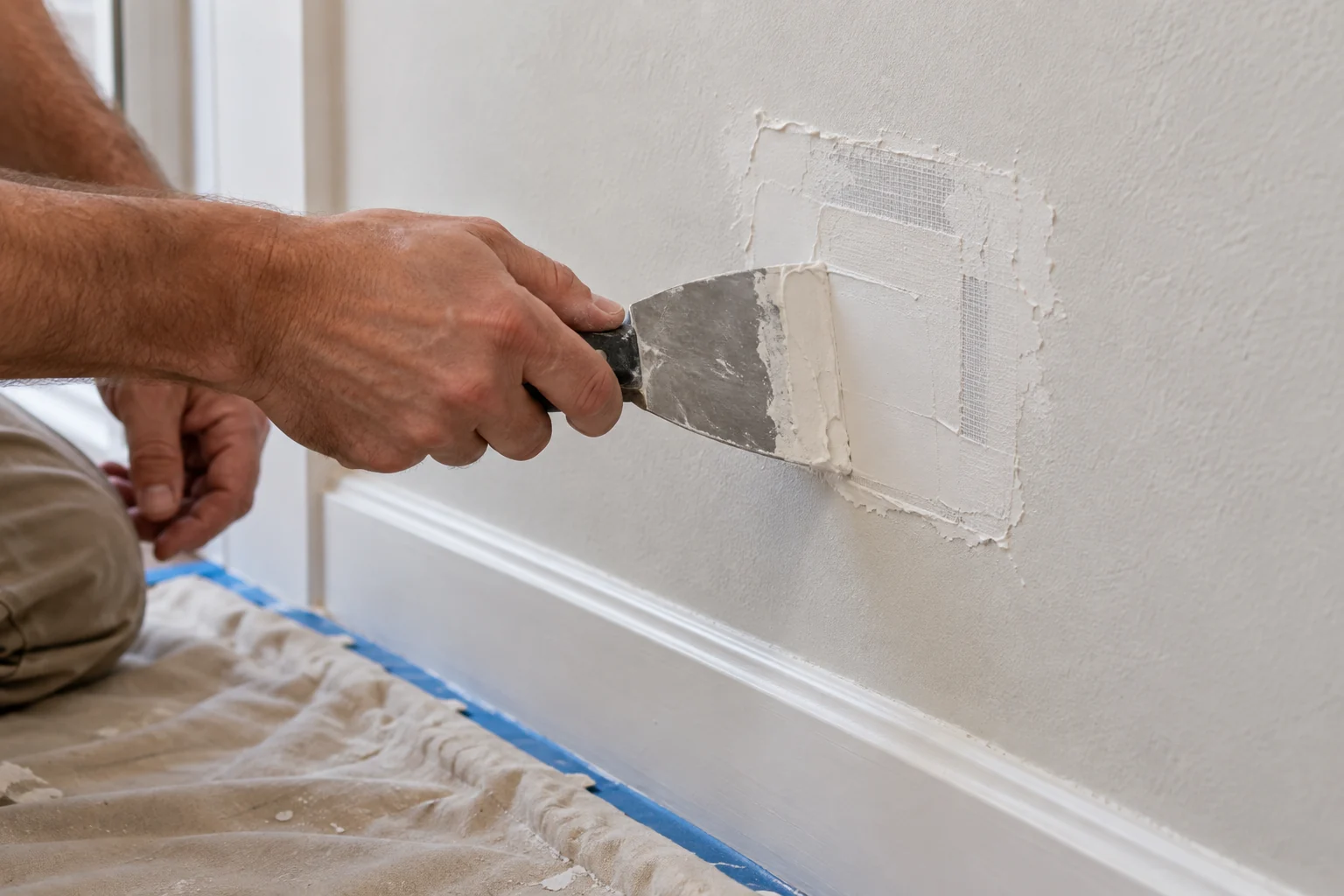
What could be included?
These are examples, not a promise that every wall is a small patch. The right repair depends on the size, cause, wall material and condition behind the surface.
Holes and dents
Picture-hook holes, impact dents and other localized damage may be suitable for filling or patching.
Cracks and corners
A damaged outside corner or a visible crack may need more than surface compound. The cause should be checked before proposing a finish.
Ready for paint
Sanding, texture, primer and painting are separate parts of a finished appearance. The written scope should say which are included.
Show the whole problem.
One close photo helps show the damage. A wider photo shows where it is and what surrounds it. Include a common object for scale if the size is hard to judge. For several damaged spots, send a separate photo of each one and a room view that shows their locations.
- Send a close photo and a wider view of the wall.
- Share the approximate length and width of the damaged area.
- Tell us if the wall feels soft, is wet, or has been repaired before.
- Say whether you want a patch only, paint-ready prep, texture, primer or painting considered.
Make the area accessible.
Move small items away from the wall and let us know about furniture that cannot be moved. If a matching paint color or texture matters, have the paint can or finish information available if you have it. Clear the floor below the repair so the work area can be protected and reached safely. Mention shelves, wiring devices or wall-mounted items close to the damage rather than removing anything you are unsure about.
Why the cause matters.
A dent from furniture and a hole left by a removed fixture are different from a stain that keeps returning. The visible mark may be only part of a moisture problem, movement in a wall, or damage to material behind the drywall. If the area is damp, soft or repeatedly cracking, say so when you request help. A cosmetic patch should wait until the cause has been understood and corrected.
Also tell us if the surface is plaster, a textured wall or a ceiling. Those conditions can change the method, access and finish expectation. If you are unsure what the wall is made of, a close photo of the damaged edge may help. The goal is to define the right job before anyone promises a simple patch.
What does “finished” mean?
A patch can mean filling and smoothing the damage; “paint-ready” may include additional surface preparation; a painted result adds primer and color work. Texture matching, painting only the repair, and repainting the whole wall are different scopes. Even matching paint from the original can look different because sheen, age and lighting change what you see.
Ask the estimate to name the finish level and who supplies the paint. Some repairs need more than one application and drying period before sanding or coating. Sherwin-Williams notes that a visible touch-up may require painting the full wall. That possibility is worth discussing before a repair begins.
What happens next?
Send the details
Email the wall location, approximate size and finish you expect, with photos if available.
Check the fit
The request is reviewed to determine whether a visit or more information is needed. Photos alone may not show hidden damage.
Agree on scope
Review the proposed work, materials and finish in an estimate before scheduling repair work.
Know what to ask.
Does drywall repair include painting?
Do not assume it does. Patch, sanding, texture, primer and painting should be listed separately in the proposed scope. Tell us what finished result you want.
Can a patched wall be made invisible?
Color, sheen, texture and lighting affect how a repair looks. Matching an existing finish may require a larger blend or painting area. The expected result should be discussed after seeing the wall.
Can a photo give an exact price?
Photos help define the request, but underlying damage, access and the finish required can change the scope. An estimate should state the work and materials before repair begins.
Will the repair be completed in one visit?
That depends on the size and type of damage, the materials used and the finish requested. Drying time and painting can make a second visit necessary. Ask for the expected sequence when reviewing the estimate.
What if the damaged area is on a ceiling?
Show the full ceiling and a close view of the damage. Height, access, texture and the cause of the damage can change the scope. An active leak or recurring stain should be addressed before cosmetic work.
Other useful pages.
Start with a clear photo.
Email a close photo plus a wider room view to start the estimate request.